

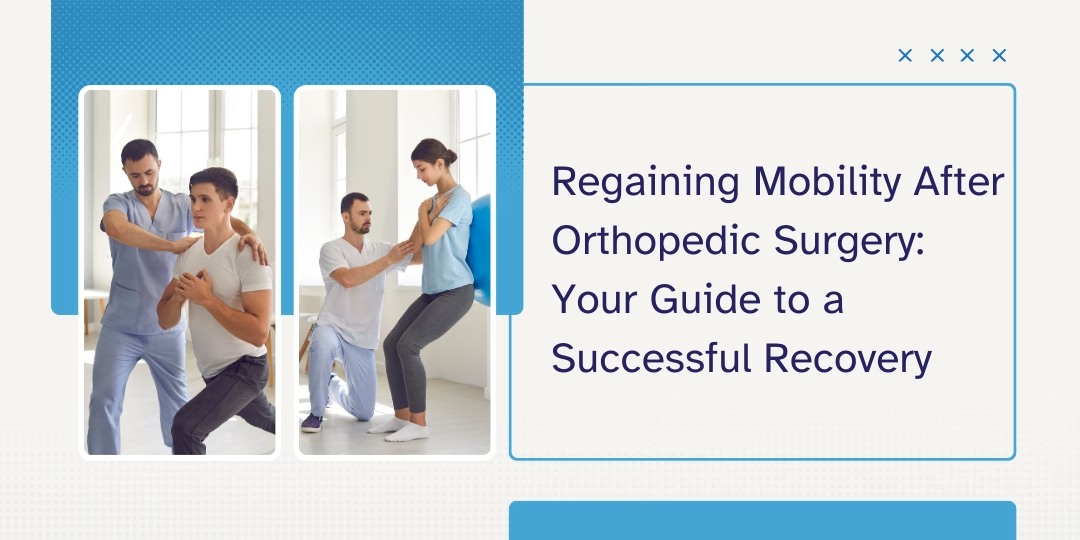
The decision to undergo orthopedic surgery—whether a hip replacement, knee arthroplasty, or spinal procedure—is driven by a single, powerful goal: to regain the ability to move without pain. The surgery itself, however skilled the surgeon and advanced the technology, is only the first chapter of your transformation. The true story of your recovery unfolds in the weeks and months that follow, as you progressively reclaim the mobility that pain had stolen.
This guide is designed to be your companion through that journey. It will walk you through what to expect, how to partner effectively with your rehabilitation team, and the principles that govern successful recovery after orthopedic surgery.
Part I: Understanding the Recovery Journey
The Three Phases of Healing
Orthopedic recovery follows a predictable trajectory, though individual timelines vary based on the procedure, your baseline health, and your commitment to rehabilitation.
Phase 1: Acute Recovery (Weeks 1-2)
- Focus: Pain management, wound healing, and protection of the surgical site
- Mobility: Beginning with assisted ambulation (walker or crutches), gentle range of motion
- Goals: Manage swelling, prevent complications, initiate basic movement
Phase 2: Rehabilitation (Weeks 3-12)
- Focus: Progressive strengthening, gait training, and increasing range of motion
- Mobility: Transitioning from assistive devices to independent ambulation
- Goals: Restore functional strength for daily activities, normalize walking pattern
Phase 3: Conditioning (Months 3-12)
- Focus: Building endurance, returning to recreational activities, optimizing long-term function
- Mobility: Full return to most desired activities, continued strength development
- Goals: Achieve maximum functional recovery, establish lifelong joint protection habits
Understanding these phases helps set realistic expectations and prevents the frustration that comes from comparing your Week 2 progress to someone else’s Month 6 achievements.
Part II: The First Steps—Hospital to Home
Day One: The Foundation of Recovery
In modern orthopedic care, mobility begins immediately after surgery. Within hours of your procedure—often the same day—you will be assisted out of bed and encouraged to take your first steps. This is not optional; it is essential.
Why early mobilization matters:
- Prevents blood clots (deep vein thrombosis)
- Reduces post-operative stiffness
- Accelerates clearance of anesthetic agents
- Provides immediate psychological reinforcement that recovery has begun
Your nursing team and physical therapist will guide you through these first movements, teaching you safe techniques for transferring in and out of bed, using the bathroom, and managing your assistive device.
The Hospital Stay: Building Basic Competence
During your hospitalization (typically 1-4 days depending on procedure), your physical therapist will work with you daily to:
- Master safe ambulation with your walker or crutches
- Learn prescribed exercises for range of motion and early strengthening
- Practice stair climbing if you have stairs at home
- Understand your weight-bearing restrictions (if any)
By discharge, you should feel confident in your ability to perform basic movements safely and understand exactly what you need to do during your first weeks at home.
Transitioning Home: Preparing Your Environment
Before surgery, thoughtful preparation of your home environment pays enormous dividends:
Essential home modifications:
- Remove loose rugs and trip hazards from all walking paths
- Create a ground-floor sleeping area if stairs are an issue
- Install grab bars in the shower and near the toilet
- Arrange a shower chair or bench for seated bathing
- Place frequently used items at waist level (no reaching or bending)
- Prepare frozen meals in advance for easy nutrition
- Arrange for help with shopping, cleaning, and pet care
Your surgical team will provide specific precautions based on your procedure—for example, hip replacement patients must avoid certain positions to prevent dislocation. Understanding these restrictions before you return home prevents accidental violations.
Part III: The Rehabilitation Partnership
Your Physical Therapist: The Coach You Need
Think of your orthopedic surgeon as the architect who designed your new joint, but your physical therapist as the contractor who helps you learn to live in it. The relationship with your PT is one of the most important factors in your ultimate outcome.
What a skilled physical therapist provides:
- Progressive exercise programming: Gradually increasing challenge as you heal
- Gait analysis and correction: Identifying and fixing abnormal walking patterns
- Manual therapy: Hands-on techniques to improve range of motion
- Pain management strategies: Modalities to control discomfort during recovery
- Motivation and accountability: The external structure that keeps you on track
The Exercise Progression
Rehabilitation exercises follow a logical progression from simple to complex:
Early Phase (Weeks 1-4):
- Ankle pumps to prevent blood clots
- Quadriceps sets and gluteal contractions (isometrics)
- Gentle range of motion exercises (heel slides, knee extension)
- Assisted ambulation with appropriate device
Mid Phase (Weeks 4-12):
- Stationary cycling for range of motion
- Progressive resistance exercises (straight leg raises, bridges)
- Balance and proprioception training
- Weaning from assistive devices as strength improves
Late Phase (Months 3-6):
- Functional strengthening (squats, lunges, step-ups)
- Endurance activities (walking programs, elliptical trainer)
- Sport-specific training if applicable
- Return to recreational activities
The Critical Variable: Consistency
Rehabilitation is not something that happens to you; it is something you do. The single most important predictor of outcome after orthopedic surgery is consistent adherence to your exercise program.
This means:
- Performing your prescribed exercises daily, not when you remember
- Pushing yourself to the edge of discomfort without crossing into pain
- Progressing activities as your therapist directs
- Attending all scheduled therapy sessions
- Maintaining activity even when motivation flags
Recovery is earned in small, daily efforts that compound over time. The patient who does their exercises faithfully at Week 2 is the patient walking without a limp at Month 3.
Part IV: Nutrition’s Role in Recovery
Fueling the Healing Process
Surgery creates a massive demand for the raw materials of tissue repair. Proper nutrition accelerates healing, reduces complications, and provides energy for rehabilitation.
Key nutritional priorities:
Protein: The building block of all tissue repair. Aim for 1.2-1.5 grams per kilogram of body weight daily—significantly more than usual. Excellent sources include lean meats, fish, eggs, dairy, legumes, and protein supplements if needed.
Vitamin C: Essential for collagen synthesis (collagen is the protein that forms the structural framework of healing tissues). Citrus fruits, berries, bell peppers, and broccoli are rich sources.
Vitamin D and Calcium: Critical for bone healing and implant integration. Dairy products, leafy greens, and supplementation as directed.
Zinc: Supports immune function and wound healing. Found in meat, shellfish, nuts, and seeds.
Hydration: Adequate fluid intake supports every metabolic process involved in healing. Aim for 8-10 glasses daily unless medically restricted.
Foods to Limit or Avoid
- Excessive sugar: Impairs immune function and promotes inflammation
- Alcohol: Interferes with healing and can interact with pain medications
- Processed foods: Provide calories without the nutrients healing requires
Part V: Managing the Emotional Journey
The Psychological Dimension of Recovery
Orthopedic recovery is not only physical. The emotional journey can be equally challenging, and acknowledging this prepares you to navigate it successfully.
Common emotional experiences:
Frustration: Your body will not cooperate as quickly as your mind wants. Simple tasks take enormous effort. This is normal and temporary.
Dependency: Allowing others to help with basic needs can be humbling. Accepting assistance gracefully is part of healing.
Fear: Fear of falling, fear of damaging the surgical site, fear that you won’t fully recover. These fears are common and usually diminish as strength returns.
Impatience: Recovery takes longer than anyone wants. Comparing your progress to others or to arbitrary timelines breeds unnecessary distress.
Strategies for Emotional Resilience
- Celebrate small victories: Each new achievement—walking to the mailbox, climbing stairs, driving again—deserves acknowledgment
- Maintain social connection: Isolation amplifies negative emotions. Stay connected with friends and family through phone, video calls, or brief visits
- Set realistic goals: Break your recovery into weekly objectives rather than focusing on the distant final outcome
- Practice patience: Remind yourself that healing has its own timeline, and pushing too hard often backfires
- Seek support if needed: If feelings of depression or anxiety persist, speak with your healthcare provider
Part VI: Returning to Life
Milestones Along the Way
While every recovery is unique, typical milestones provide a framework for expectation:
Weeks 2-4:
- Transition from walker to cane (for joint replacement patients)
- Driving may be permitted (once off narcotics and able to brake safely)
- Return to desk work if cleared
Weeks 6-8:
- Most daily activities are manageable
- Many patients discontinue assistive devices
- Return to more physically demanding work (with restrictions)
Months 3-6:
- Walking distances increase significantly
- Return to low-impact recreational activities (swimming, cycling, golf)
- Most patients feel “back to normal” for daily life
Months 6-12:
- Continued strength and endurance gains
- Return to higher-impact activities as permitted
- Full recovery of maximum function
Activity Guidelines by Procedure
Always follow your surgeon’s specific recommendations, but general guidelines include:
| Procedure | Return to Driving | Return to Desk Work | Return to Physical Work | Full Recovery |
|---|---|---|---|---|
| Hip Replacement | 4-6 weeks | 4-6 weeks | 3-6 months | 6-12 months |
| Knee Replacement | 4-6 weeks | 4-6 weeks | 4-6 months | 12 months |
| Shoulder Replacement | 6-8 weeks | 4-6 weeks | 4-6 months | 12 months |
| ACL Reconstruction | 4-6 weeks | 2-4 weeks | 6-9 months | 9-12 months |
| Spinal Fusion | 4-6 weeks | 6-12 weeks | 6-12 months | 12-24 months |
Long-Term Joint Protection
Your new joint is designed to last for decades, but it benefits from thoughtful stewardship:
- Maintain a healthy weight to reduce mechanical stress
- Choose low-impact activities for lifelong fitness (walking, swimming, cycling)
- Continue strengthening the muscles that support your joint
- Listen to your body—pain is a signal, not a challenge
- Keep annual follow-up appointments with your surgeon
Part VII: Special Considerations for Medical Travelers
Recovering Abroad: The Chromatic Advantage
For patients who travel to Türkiye for orthopedic surgery, recovery involves additional considerations—and additional support.
Structured recovery environment:
Your Chromatic package includes recovery accommodation specifically chosen for its suitability for post-surgical patients. These are not standard hotels but residences equipped with:
- Accessibility features (elevators, grab bars, walk-in showers)
- Proximity to your hospital for follow-up visits
- Quiet environments conducive to rest
- Often, on-site nursing support or easy access to medical care
Coordinated rehabilitation:
We arrange outpatient physiotherapy sessions with therapists who understand your surgeon’s specific protocols. Your recovery is not left to chance; it is actively managed.
Nutritional support:
Many recovery residences offer meal services that can accommodate post-surgical dietary needs—high-protein, nutrient-dense options that support healing.
Continuity when you return home:
Before you depart Türkiye, we provide a comprehensive rehabilitation protocol for your home-country physical therapist, ensuring that the work begun abroad continues seamlessly after your return.
Telemedicine follow-up:
We schedule virtual consultations with your Turkish surgeon at key milestones—typically 6 weeks, 3 months, and 1 year—ensuring that the surgeon who performed your procedure remains involved in your long-term outcome.
Part VIII: Red Flags—When to Call for Help
While most recoveries proceed smoothly, certain symptoms warrant immediate medical attention:
Call your surgeon immediately if you experience:
- Fever over 101°F (38.3°C)
- Increasing redness, warmth, or drainage at the incision site
- Sudden increase in pain not relieved by medication
- Calf pain, swelling, or warmth (possible deep vein thrombosis)
- Chest pain or shortness of breath (possible pulmonary embolism)
- Falls or trauma to the surgical site
At Chromatic, your case manager remains available 24/7 should any concerns arise during your recovery in Türkiye. You are never alone.
Conclusion: Your Journey to Renewed Mobility
Regaining mobility after orthopedic surgery is a partnership—between you and your surgeon, you and your physical therapist, and you and yourself. The surgery provides the structural correction; your rehabilitation transforms that correction into function.
The path requires patience, consistency, and sometimes a willingness to push through discomfort. But the destination—a life lived with less pain, greater freedom, and renewed ability to do the things you love—is worth every effort.
At Chromatic Medical Tourism, we are honored to be part of that journey. From your first consultation through your full recovery, we stand with you, ensuring that every element of your experience supports your successful outcome.
Your new joint is a gift. Your rehabilitation is how you unwrap it.
Ready to reclaim your mobility? Contact Chromatic Medical Tourism today for a confidential consultation. We will guide you through every step of your orthopedic journey—from selecting the right surgeon and hospital to supporting your recovery and ensuring your long-term success.
Your journey to pain-free movement begins with a single conversation. Let’s have that conversation today.