

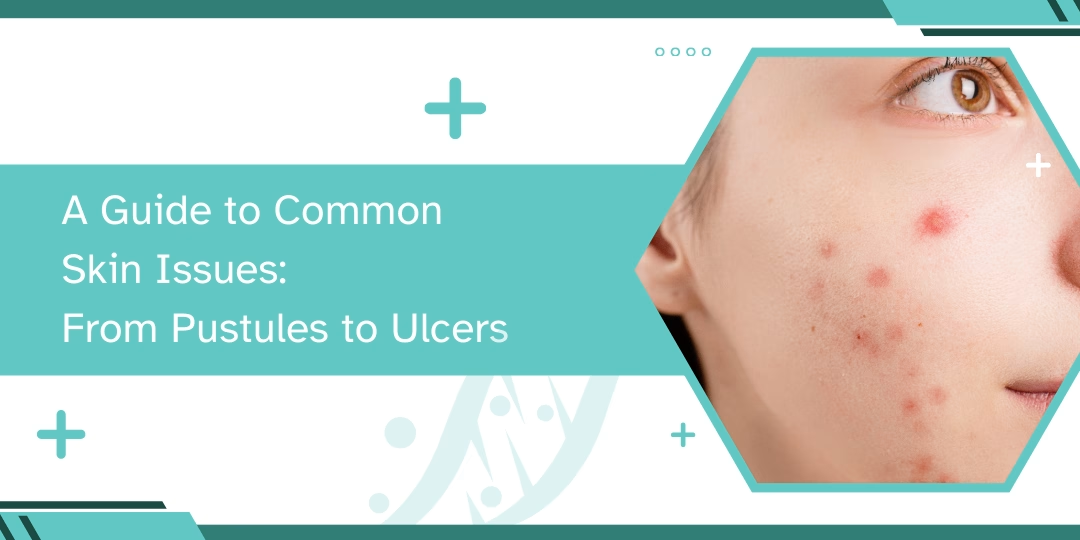
Our skin is our body’s largest organ and a visible indicator of our health. Recognizing different skin conditions is the first step toward proper care. This guide provides clear, practical information on 12 common skin issues—from everyday rashes to signs of serious underlying conditions.
1. Pustule
What it is: A small, inflamed, pus-filled blister on the skin surface. Classic example: the whitehead of a pimple.
Common Causes: Acne, bacterial infections (like folliculitis), rosacea.
At-Home Care: Keep area clean; avoid picking or squeezing. Use non-comedogenic skincare.
Treatment: Topical benzoyl peroxide or antibiotics (clindamycin); for severe acne, oral medications like isotretinoin.
2. Fissure
What it is: A deep crack or split in the skin, often painful. Common on heels, fingertips, and corners of the mouth.
Common Causes: Extremely dry skin (xerosis), eczema, chronic friction, fungal infections (like athlete’s foot).
At-Home Care: Soak in warm water, gently pat dry, and immediately apply a thick emollient or petroleum jelly to seal in moisture.
Treatment: High-potency moisturizers, topical steroids for inflammation, protective coverings.
3. Scar
What it is: The skin’s natural healing response after damage, made of fibrous collagen tissue replacing normal skin.
Common Causes: Acne, injuries, burns, surgical incisions.
At-Home Care: Sun protection is critical (SPF 30+) to prevent darkening. Silicone gel sheets can help flatten and soften scars.
Treatment: Prescription retinoids, laser therapy, microneedling, steroid injections (for keloids). Mature scars are permanent without intervention.
4. Eczema (Atopic Dermatitis)
What it is: A chronic inflammatory condition causing dry, intensely itchy, red, and cracked skin. Occurs in flares.
Common Causes: Genetic predisposition, a defect in the skin barrier, immune system dysfunction, and environmental triggers (soaps, allergens, stress).
At-Home Care: Daily bathing with lukewarm water followed immediately by a fragrance-free moisturizer (“soak and seal”). Identify and avoid personal triggers.
Treatment: Topical corticosteroids or calcineurin inhibitors during flares. For severe cases, systemic immunosuppressants or newer biologic drugs (dupilumab).
5. Papule
What it is: A small, solid, raised bump on the skin less than 1 cm wide (e.g., a closed comedone in acne, a mole, or a wart).
Common Causes: Acne, insect bites, skin tags, viral infections (warts), early stages of many rashes.
At-Home Care: Depends on cause. For acne, use gentle salicylic acid washes. Do not scratch.
Treatment: Targeted to the underlying cause—acne treatments, cryotherapy for warts, excision if suspicious.
6. Tumor (of the Skin)
What it is: Any abnormal mass of tissue. In dermatology, this can be benign (harmless) or malignant (cancerous).
Common Causes: Uncontrolled cell growth. Benign examples: seborrheic keratosis, cysts. Malignant: basal cell carcinoma, squamous cell carcinoma, melanoma.
At-Home Care: Never self-treat a suspicious growth. Perform regular skin self-exams (remember the ABCDEs: Asymmetry, Border irregularity, Color variation, Diameter >6mm, Evolving).
Treatment: Surgical excision is standard for cancerous tumors. Mohs surgery for precision. Benign tumors are removed if symptomatic or for cosmetic reasons.
7. Scales
What it is: An accumulation of excess dead skin cells that flake off the surface, appearing dry and plate-like.
Common Causes: Psoriasis (thick, silvery scales), severe dry skin, ichthyosis, fungal infections (tinea).
At-Home Care: Gentle exfoliation in the bath, followed by heavy moisturizers with urea, lactic acid, or ceramides.
Treatment: For psoriasis: topical steroids, vitamin D analogs, phototherapy, systemic medications. Antifungals for tinea.
8. Erythema
What it is: Redness of the skin caused by increased blood flow in superficial capillaries. It blanches (turns white) when pressed.
Common Causes: Sunburn, allergic reactions, infections (cellulitis), inflammation (rosacea, lupus rash), emotional blushing.
At-Home Care: Cool compresses, fragrance-free aloe vera for sunburn, and avoid known irritants.
Treatment: Address the root cause: antihistamines for allergies, antibiotics for infection, anti-inflammatories for autoimmune causes.
9. Vitiligo
What it is: An autoimmune condition where the immune system attacks and destroys melanocytes, causing smooth, white patches of skin to appear.
Common Causes: Autoimmune origin, often with a genetic component. Can be triggered by stress or skin trauma.
At-Home Care: Meticulous sun protection is essential, as depigmented skin burns easily. Camouflage makeup can help.
Treatment: Topical steroids or calcineurin inhibitors, narrowband UVB phototherapy, and in some cases, surgical grafting. Newer JAK inhibitor creams (ruxolitinib) show promise.
10. Cyanosis
What it is: A bluish or purplish discoloration of the skin, lips, or nail beds, indicating low oxygen levels in the blood.
Common Causes: A medical emergency. Causes include severe lung disease (COPD, pneumonia), heart failure, congenital heart defects, blood circulation problems, or exposure to extreme cold.
At-Home Care: None. Sudden onset of cyanosis, especially with shortness of breath or chest pain, requires immediate emergency medical attention.
Treatment: Hospital-based treatment to provide oxygen and address the underlying life-threatening cardiac or respiratory condition.
11. Ulcer
What it is: An open sore or break in the skin that fails to heal, often with loss of the upper skin layers. Can be shallow or deep.
Common Causes: Poor circulation (venous stasis or arterial ulcers), prolonged pressure (bedsores), diabetes (diabetic foot ulcers), infection.
At-Home Care: Keep clean and covered with a sterile dressing. For pressure ulcers, frequent repositioning is vital. Diabetic foot ulcers require immediate podiatrist care.
Treatment: Specialized wound care (debridement, advanced dressings), treating underlying cause (compression for venous, revascularization for arterial, offloading for diabetic).
12. Necrosis
What it is: The death of living tissue (skin, fat, muscle). Appears black, brown, or dark red, and is often leathery or malodorous.
Common Causes: Severe infection (necrotizing fasciitis), loss of blood supply (gangrene), severe burns, spider bites (brown recluse), complications of untreated ulcers.
At-Home Care: None. This is a serious medical emergency. Do not delay.
Treatment: Immediate hospitalization for surgical removal (debridement) of all dead tissue, high-dose intravenous antibiotics, and supportive care.
When to See a Doctor
Consult a dermatologist or primary care physician for any persistent, changing, or painful skin issue. Seek immediate emergency care for:
- Cyanosis (blue lips/skin) with breathing difficulty.
- Signs of necrosis (black tissue) or rapidly spreading red, painful skin (potential necrotizing infection).
- Any sudden, severe rash with fever.
- A new or changing mole that meets the ABCDE criteria of melanoma.
Disclaimer: This guide is for informational purposes only and is not a substitute for professional medical advice, diagnosis, or treatment. Always seek the advice of your physician or a qualified dermatologist with any questions you may have regarding a skin condition.