

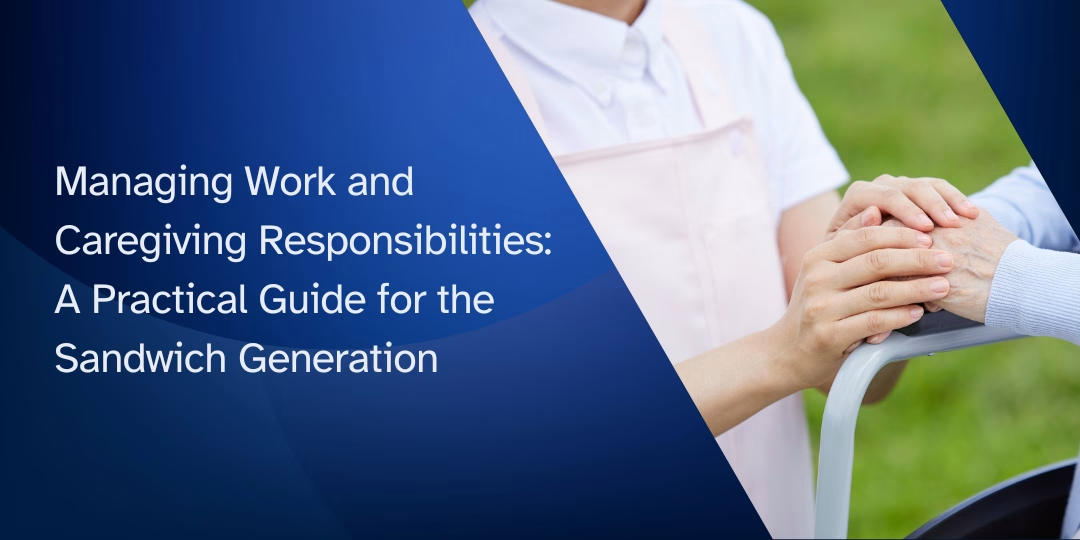
You are in a meeting when your phone buzzes. It is the care facility. Your parent has fallen. You excuse yourself, heart racing. Later that night, you catch up on work emails after putting your children to bed. You collapse into bed, exhausted, only to do it all again tomorrow.
You are not alone. Millions of working adults are also caregivers—for aging parents, spouses with chronic illness, children with special needs, or partners recovering from surgery. This “double duty” is exhausting, but with the right strategies, it is possible to manage both without losing yourself.
This guide offers practical strategies for communicating with employers, setting boundaries, using leave policies, and protecting your own well-being while juggling work and care.
Part I: The Scope of the Challenge
The Statistics
- 1 in 5 workers in the US provides care for an adult relative.
- 60% of caregivers work full-time.
- 70% of caregivers report making work-related adjustments (reducing hours, turning down promotions, taking leave).
- Caregivers lose an average of $300,000 in lifetime wages due to reduced work hours and missed advancement.
The Emotional Toll
| Feeling | Why It Happens |
|---|---|
| Guilt | “I should be at work.” / “I should be with my loved one.” |
| Resentment | Toward the care recipient, toward your employer, toward family who do not help |
| Anxiety | About job security, about your loved one’s safety, about the future |
| Exhaustion | Physical and emotional depletion |
| Isolation | Coworkers may not understand; friends may drift away |
You are not failing. You are navigating an impossible system. There is help.
Part II: Before You Need It—Plan Ahead
The best time to prepare for a caregiving crisis is before it happens.
Know Your Rights and Benefits
| Policy | What to Ask HR |
|---|---|
| Family and Medical Leave Act (FMLA) (US) | “How much unpaid leave am I entitled to? What documentation is required?” |
| Paid sick leave | “Can I use sick leave to care for a family member?” |
| Paid family leave (state-specific in US, common in other countries) | “Does our company offer paid leave for caregiving?” |
| Short-term disability (for the caregiver’s own health conditions) | “How does this interact with family leave?” |
| Flexible work arrangements | “Does the company allow telecommuting, compressed workweeks, or flexible hours?” |
| Employee Assistance Program (EAP) | “Do we have counseling or referral services for caregivers?” |
Have the Conversation Early
Do not wait until you are in crisis to tell your manager.
What to say:
“I want to let you know that my [parent/spouse] has been diagnosed with [condition]. I am not asking for anything right now, but I may need some flexibility in the coming months. I want to be proactive about planning so my work does not suffer.”
This conversation builds goodwill and prepares your manager for future requests.
Identify Your Workplace Allies
| Person | Role |
|---|---|
| Direct manager | Approves schedule changes, leave, and accommodations |
| HR representative | Knows policies, can advocate for you |
| Trusted coworker | Can cover for you in emergencies, provide emotional support |
| Union representative (if applicable) | Can help navigate workplace rights |
Part III: Communicating with Your Employer
Many caregivers suffer in silence because they fear retaliation. In most developed countries, discrimination based on family status or caregiving responsibilities is illegal—but that does not mean it never happens.
What to Disclose (And What Not to Disclose)
| Do Share | Do Not Share |
|---|---|
| That you are a caregiver | Specific medical details of your loved one (protected by privacy laws) |
| That you may need flexibility | Negative comments about your loved one or your situation |
| That you are committed to your job | Complaints about other family members who do not help |
| That you appreciate your employer’s support | Exaggerations or dishonesty |
How to Ask for Accommodations
Use this framework:
- State the need: “My [parent] has appointments every Tuesday morning for the next 6 weeks.”
- Propose a solution: “I would like to come in early (7 AM) on Tuesdays and leave at 3 PM for the appointment, then log back on from home from 8-10 PM to finish my work.”
- Show the benefit to the employer: “This will allow me to be fully present during core hours and complete all my deliverables on time.”
If You Are Denied
| Step | Action |
|---|---|
| 1 | Ask for the denial in writing |
| 2 | Escalate to HR (your manager may be unaware of the law) |
| 3 | Consult a legal aid or employment attorney (if discrimination is suspected) |
| 4 | Consider whether you need to look for a more flexible job |
Part IV: Types of Workplace Flexibility
Telecommuting (Working from Home)
| Pros | Cons |
|---|---|
| No commute time (time back) | Blurred boundaries between work and care |
| Can monitor loved one while working | Interruptions may reduce productivity |
| May be more comfortable | Isolation from coworkers |
Make it work: Set a dedicated workspace. Establish rules with your loved one (“If the door is closed, knock unless it is an emergency”). Use noise-canceling headphones.
Flexible Hours
| Examples | Best For |
|---|---|
| Start at 6 AM, leave at 2 PM | Early morning doctor appointments |
| Start at 10 AM, leave at 6 PM | Morning care tasks |
| Work 4 ten-hour days | One weekday off for appointments |
| Compressed workweek | Travel to see a parent out of town |
Job Sharing
Two employees share one full-time role. This can be ideal for caregivers who need reduced hours but want to keep benefits.
Phased Retirement
For older workers who are caring for a spouse, gradually reducing hours over months or years may be an option.
Part V: Managing Caregiving During Work Hours
The Night Before
| Task | Why |
|---|---|
| Prepare medications for the next day | Reduces morning scramble |
| Lay out clothes for your loved one | Saves time |
| Pack your lunch and work bag | So you can focus on care tasks in the morning |
| Confirm appointments | Prevents last-minute surprises |
During the Workday
| Strategy | How to Implement |
|---|---|
| Block “caregiver time” on your calendar | 15 minutes in the morning, 15 minutes at lunch to check in |
| Use a backup plan | Have a neighbor, friend, or paid caregiver who can step in for emergencies |
| Set boundaries with your loved one | “I am working from 9-12. Unless you are bleeding or cannot breathe, please wait.” |
| Batch non-urgent care tasks | One call to the insurance company, not five small calls. |
| Use technology | Video doorbells, medication reminders, fall detectors, and remote monitoring can give peace of mind. |
Handling Emergencies
Have a plan:
- Who is the first contact? (You, a sibling, a neighbor?)
- What is the backup plan if you cannot leave work? (Who can go?)
- How will you communicate with work? (Text your manager: “Emergency. Will update when I can.”)
Do not feel guilty. Emergencies happen. You are human.
Part VI: Leave Options
Intermittent Leave (FMLA in the US)
FMLA allows eligible employees to take leave in blocks of hours or days for medical appointments or flare-ups. You do not have to take it all at once.
How to request:
“I need intermittent FMLA leave for my [parent]. Some weeks I may need 4 hours for appointments; other weeks none. I will provide as much notice as possible.”
Paid Family Leave
Several US states (CA, NY, NJ, RI, MA, WA, CT, OR, CO) and many countries offer paid family leave for caregiving. This is often partial wage replacement (60-90%) for a set number of weeks.
Using Sick Leave for Family Care
Some employers allow you to use your own sick leave to care for a family member. Check your policy.
Unpaid Leave
If you have exhausted other options, you may need to request an unpaid leave of absence. This is a last resort, but it is better than losing your job.
Part VII: Involving Other Family Members
If you are the primary caregiver, you may feel resentful toward siblings or other relatives who do not help.
The Family Meeting
Schedule a structured conversation (not during a crisis). Agenda:
- What are Mom’s needs? (List them: appointments, meals, finances, transportation, social visits)
- What is currently being done? (By you)
- What help is needed? (Specific tasks, not vague “more help”)
- What can each person contribute? (Time, money, coordinating services)
Sample Task List
| Task | Time Required | Who Can Do It |
|---|---|---|
| Grocery shopping | 2 hours/week | [Sibling A] |
| Medication management | 1 hour/week | [Sibling B] |
| Transportation to appointments | 3 hours/week | Hire a driver (split cost) |
| Financial management | 2 hours/month | [Sibling C] |
| Social visits | 2 hours/week | Rotate among all |
If They Will Not Help
You cannot force anyone to care. But you can:
| Strategy | Example |
|---|---|
| Stop overfunctioning | “I cannot do the weekly appointments anymore. If no one else can take them, we will need to hire a caregiver.” |
| Ask for money instead | “If you cannot help with time, would you contribute to a hired caregiver?” |
| Accept the limits | Some people will not step up. Grieve that, then move on. |
Part VIII: Protecting Your Own Health
Caregivers neglect themselves. This leads to burnout, illness, and eventually—inability to care for anyone.
The “Oxygen Mask” Rule
On an airplane, you secure your mask before helping others. Caregiving is the same. You cannot pour from an empty cup.
Micro-Self-Care for Busy Caregivers
| Need | 5-Minute Solution |
|---|---|
| Stress | Deep breathing (4-7-8 method) |
| Hydration | Keep a water bottle at your desk and in the car |
| Movement | Stand during phone calls, walk to the bathroom on another floor |
| Social connection | Text one friend daily, even “Thinking of you” |
| Sleep | Protect 7-8 hours. It is not selfish; it is survival. |
| Medical care | Keep your own appointments. You cannot care for others if you are sick. |
Signs You Are Burning Out
| Sign | Action |
|---|---|
| Chronic exhaustion not relieved by rest | Take a mental health day. |
| Irritability with loved ones and coworkers | Seek counseling. |
| Withdrawing from friends | Force yourself to make one social plan. |
| Neglecting your own health | Make one medical appointment today. |
| Feelings of hopelessness | Speak to a therapist. |
Part IX: Resources for Working Caregivers
| Resource | What It Offers |
|---|---|
| Caregiver Action Network (USA) | Education, peer support, and advocacy |
| Archangels | Concierge service for working caregivers (employer-sponsored) |
| Employer EAP | Free counseling and referral services |
| Local Area Agency on Aging | Respite care, support groups, and resource referral |
| Online support groups | Facebook groups, Reddit (r/caregivers), CaringBridge |
| Care.com or similar | Paid caregivers, sitters, and companions |
Summary: Your Work-Caregiving Survival Checklist
Before a Crisis
- Learn your employer’s leave policies (FMLA, paid family leave, sick leave for family care)
- Talk to your manager proactively
- Identify workplace allies
- Research community resources (adult day programs, in-home care, meal delivery)
During a Crisis
- Request intermittent leave (if needed)
- Delegate tasks to other family members (or hire help)
- Use your EAP for counseling or referrals
- Communicate with your manager (briefly, professionally)
- Protect your own health (sleep, hydration, movement)
Long-Term Sustainability
- Schedule regular respite care (even 2 hours a week)
- Keep your own medical appointments
- Stay connected with friends (not just caregiving acquaintances)
- Reassess periodically: Is this arrangement sustainable? What needs to change?
Conclusion: You Are Doing Two Hard Jobs
Caregiving is a job. Working is a job. Doing both is exhausting, and it is okay to admit that.
You are not failing. You are navigating an impossible system with limited resources. Give yourself credit for showing up every day—to work, to caregiving, to life.
And remember: You cannot do it all alone. Ask for help. Accept help. Hire help if you can. Your health—and your ability to keep caring—depends on it.
At Chromatic Medical Tourism, we support caregivers as much as patients. We provide resources for respite care, coordination of home health services, and emotional support—because we know that caregiving does not stop at the hospital door.
Contact us to learn how we help families navigate the dual demands of work and care.