
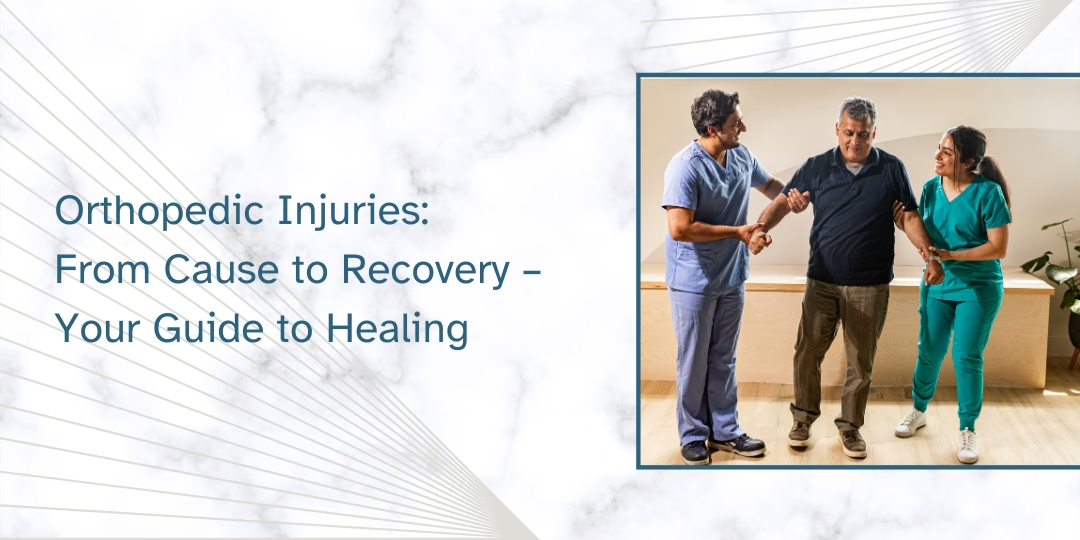
Orthopedic injuries—affecting bones, joints, ligaments, tendons, and muscles—are among the most common reasons people seek medical care. Whether from a sudden sports impact or years of gradual wear and tear, these injuries can significantly disrupt your life. Understanding the causes, the modern treatment landscape, and what to realistically expect during recovery is the first step toward regaining strength and mobility.
Part 1: Common Causes – How Injuries Happen
Orthopedic injuries typically fall into two broad categories:
1. Acute Traumatic Injuries
These result from a sudden, specific force or impact.
- Fractures (Broken Bones): Caused by falls, direct blows, or severe twists (e.g., wrist fracture from a fall, ankle fracture during sports).
- Dislocations: When a bone is forced out of its joint socket, often from a fall or collision (e.g., shoulder dislocation).
- Sprains: Overstretching or tearing of ligaments, the tissue connecting bones at a joint (e.g., ankle sprain).
- Strains: Overstretching or tearing of muscles or tendons, the tissue connecting muscle to bone (e.g., hamstring strain, tennis elbow).
- Meniscal & Ligament Tears: Common knee injuries from twisting or pivoting motions (e.g., ACL tear, meniscus tear).
2. Overuse & Degenerative Conditions
These develop gradually due to repetitive stress or age-related wear.
- Tendinitis/Tendinopathy: Inflammation or degeneration of a tendon from repetitive activity (e.g., rotator cuff tendinitis, Achilles tendinitis).
- Bursitis: Inflammation of the fluid-filled sacs (bursae) that cushion joints.
- Osteoarthritis: The “wear-and-tear” breakdown of protective joint cartilage, leading to pain and stiffness.
- Stress Fractures: Tiny cracks in a bone caused by repetitive force, common in athletes.
Part 2: Modern Treatment Options – A Tiered Approach
Treatment is highly individualized, progressing from conservative to surgical based on injury severity, location, and patient goals.
Conservative (Non-Surgical) Treatments
The first line of defense for most injuries aims to reduce pain and promote natural healing.
- R.I.C.E. Protocol (Rest, Ice, Compression, Elevation): Initial management for acute soft-tissue injuries.
- Medication: Over-the-counter NSAIDs (e.g., ibuprofen) for pain and inflammation.
- Immobilization: Use of splints, braces, or casts to protect and stabilize the injured area.
- Physical Therapy (PT): The cornerstone of recovery. PT restores range of motion, builds strength, improves stability, and retrains movement patterns to prevent re-injury.
- Injections:
- Corticosteroids: Powerful anti-inflammatory for joints or soft tissues.
- Hyaluronic Acid: “Viscosupplementation” for osteoarthritis to lubricate the knee.
- Platelet-Rich Plasma (PRP): Uses concentrated growth factors from your own blood to stimulate healing in tendons, ligaments, and arthritis.
Surgical Interventions
Necessary when conservative measures fail or for severe injuries.
- Arthroscopic Surgery: A minimally invasive “keyhole” surgery using a tiny camera. Used to repair torn cartilage (meniscus), reconstruct ligaments (ACL), or remove debris.
- Fracture Repair: Using internal fixation (plates, screws, rods) or external fixation to stabilize broken bones for proper healing.
- Joint Replacement (Arthroplasty): For end-stage arthritis, the damaged joint is replaced with a prosthetic implant (common in hips and knees).
- Soft Tissue Repair: Surgical reattachment or reconstruction of severely torn tendons (e.g., rotator cuff, Achilles tendon) or ligaments.
Part 3: The Recovery Period – What to Realistically Expect
Recovery is not a passive process; it’s an active partnership between you and your healthcare team.
The Three Phases of Healing:
- Inflammatory Phase (Days 1-7): The body’s initial response with swelling and pain to protect the area. Focus is on controlling inflammation with RICE and medication.
- Proliferative Phase (Weeks 2-6): The body repairs the damage by building new tissue. Gradual, guided movement via physical therapy begins to prevent stiffness and promote proper tissue alignment.
- Remodeling Phase (Months 3-12+): The new tissue matures and strengthens. Rehabilitation intensifies to restore full function, strength, and proprioception (joint position sense).
Factors Influencing Recovery Time:
- Type & Severity of Injury: A mild ankle sprain may heal in 2-4 weeks; an ACL reconstruction requires 6-9 months for full sports return.
- Patient’s Age & Overall Health: Younger, healthier individuals typically heal faster.
- Adherence to Rehab: Consistent physical therapy is the single greatest predictor of a successful outcome.
- Surgical Technique: Minimally invasive approaches often lead to faster initial recovery than open surgeries.
The Role of Advanced Recovery Aids:
Modern orthopedics utilizes technology to enhance healing:
- Cryotherapy: Controlled cold therapy units to manage post-op swelling and pain.
- Electrical Stimulation & Ultrasound: Used in PT to reduce pain, stimulate muscles, and promote soft tissue healing.
- Tele-rehabilitation: Remote PT sessions to ensure continuity of care.
The Turkish Advantage in Orthopedic Care
For complex injuries or elective procedures like joint replacement, Türkiye has become a leading global destination, offering:
- High-Volume Specialist Surgeons: Orthopedists who perform hundreds of specific procedures annually, ensuring refined expertise.
- Cutting-Edge Technology: Widespread use of robotic-assisted joint replacement, computer navigation, and advanced arthroscopic systems.
- Integrated Rehabilitation: Many centers offer in-house, intensive physiotherapy programs as part of the treatment package.
- Cost-Effective Excellence: World-class care is available at a fraction of the cost in North America or Western Europe, without compromising on implant quality or surgical standards.
Conclusion: A Proactive Path to Recovery
An orthopedic injury is a setback, not a permanent state. Today’s treatment options are more effective and less invasive than ever before. The key to a successful recovery lies in an accurate diagnosis, a tailored treatment plan that matches your lifestyle goals, and a committed partnership with your orthopedic specialist and physical therapist.
By understanding the process from cause through recovery, you empower yourself to take an active role in your healing journey, paving the way for a strong and sustainable return to the activities you love.
Disclaimer: This blog post is for informational purposes only and is not a substitute for professional medical advice, diagnosis, or treatment. If you have sustained an injury, please consult an orthopedic specialist.